Persian Dramatic Storytelling
(PDS)
Persian Dramatic Storytelling (PDS) is one of the world's oldest continuous performance traditions, tracing its origins to pre-Islamic Persia and the ritual practices of Zoroastrianism.
Its most enduring form, Naghali, is a solo art in which a single performer, the Naghal, narrates and embodies an entire story, acting out all characters through exaggerated, symbolic gesture.
The Naghal was a traveller, moving across the Persian Empire, performing anywhere, absorbing local stories into the tradition and carrying an abridged archive of texts and performance notes (the Tumar) from community to community. It was a practice that survived through person-to-person transmission.
Following the Islamic conquest of Persia in the seventh century, Naghali was stripped of many of its defining elements: female performance, dance, shamanic acting style, puppetry, music. It was forced to conform to new religious and political constraints. The pre-Islamic form was effectively lost. In recognition of the continuing threat to this tradition, UNESCO placed Naghali on its "List of Intangible Cultural Heritage in Need of Urgent Safeguarding".
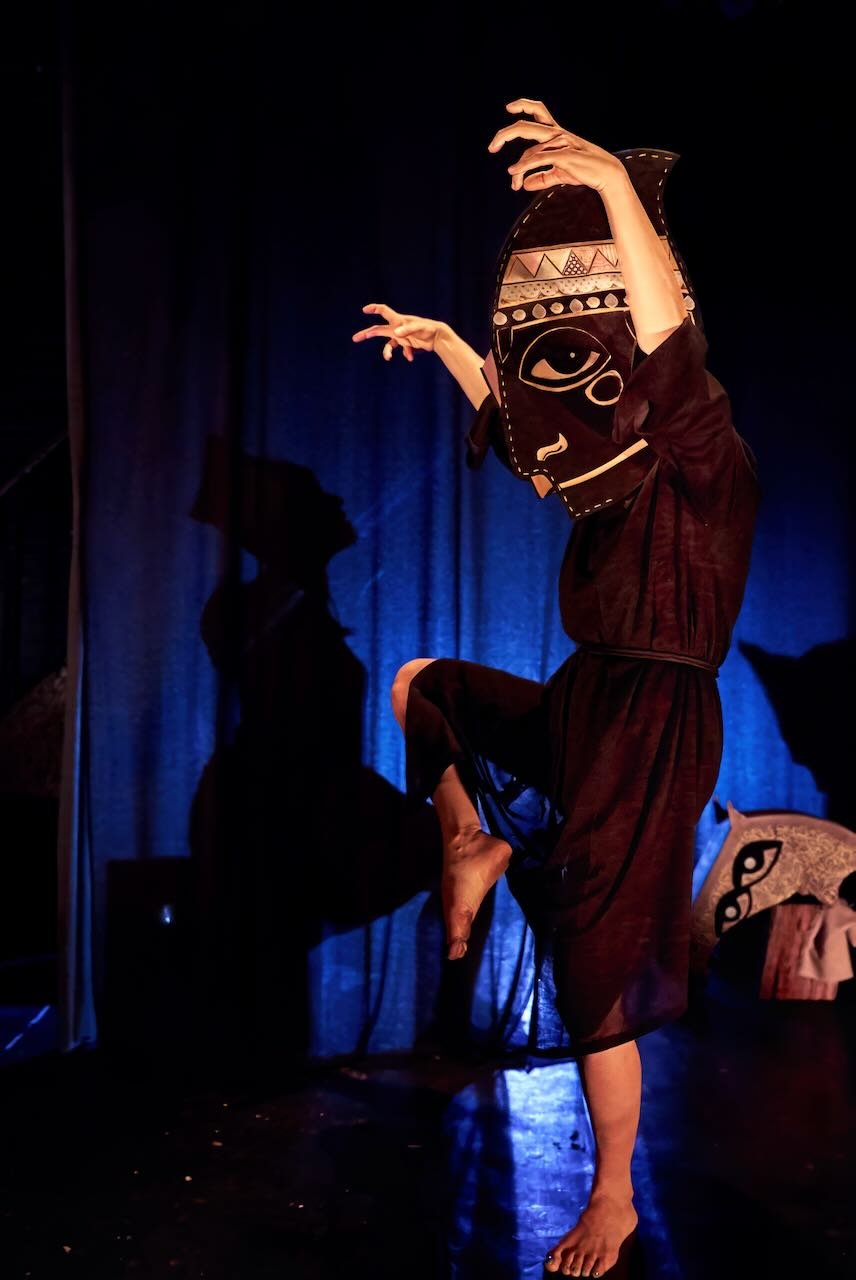
© 2026 Elnaz Shsehgelani