Research and Practice in
Persian Dramatic Storytelling
(PDS)
My research and practice began in response to the endangered status of Naghali (Persian Dramatic Storytelling). After about 10 years of practice-led exploration of Naghali in the context of Western Performing Arts, my PhD research (2021) undertook a creative reconstruction of the gestural vocabulary of pre-Islamic Naghali: a dimension that has been largely lost to the mists of time. Drawing on illuminated manuscripts of the Shahnameh (The Book of Persian Kings) I developed the Naghali Gestural Vocabulary: symbolic, stylised body movements grounded in ancient Persian visual culture.
From this I developed Adamaktion: a system for notating and teaching movement. The name derives from Adamak, meaning 'human' in Persian. Adamaktion provides a pre-built gestural structure: learnable forms that serve as a starting point for any storyteller, regardless of experience. Rendered as figurative line drawings, the notation travels across languages and cultures. It is a contemporary Tumar (the portable scripts used by Naghali performers in ancient times).
My practice has expanded into ‘calligraphic.motion': Line/Body/Play - a methodology generating sequences of Adamaktions. Drawing on Avesta, the ancient calligraphy of Zoroastrian Persia, calligraphic.motion allows one to find the geometry of inscription in one's own body before incorporating gesture. Line is the entry point; body is the medium; Bāz (the Persian concept of creative play) is the mode of discovery.
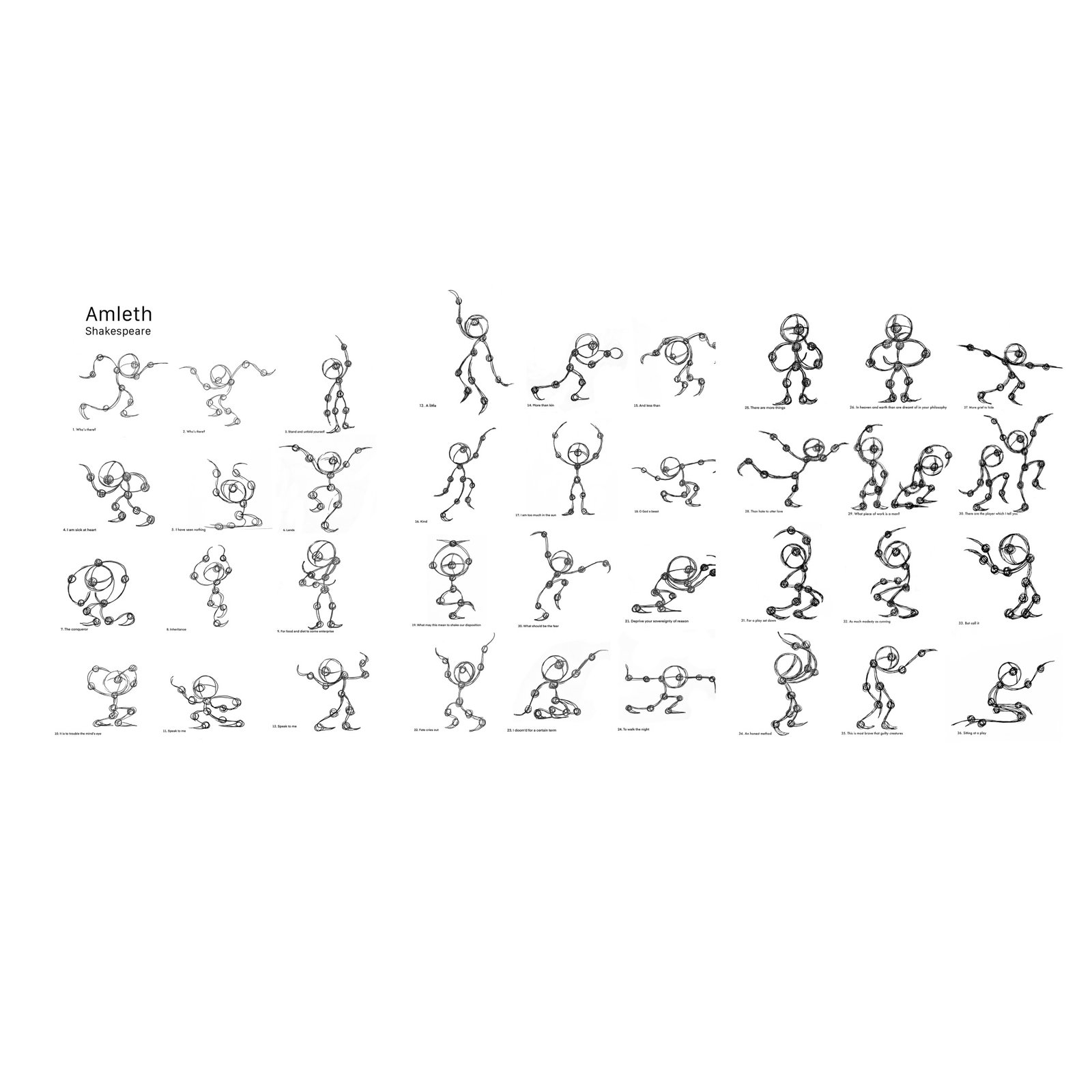
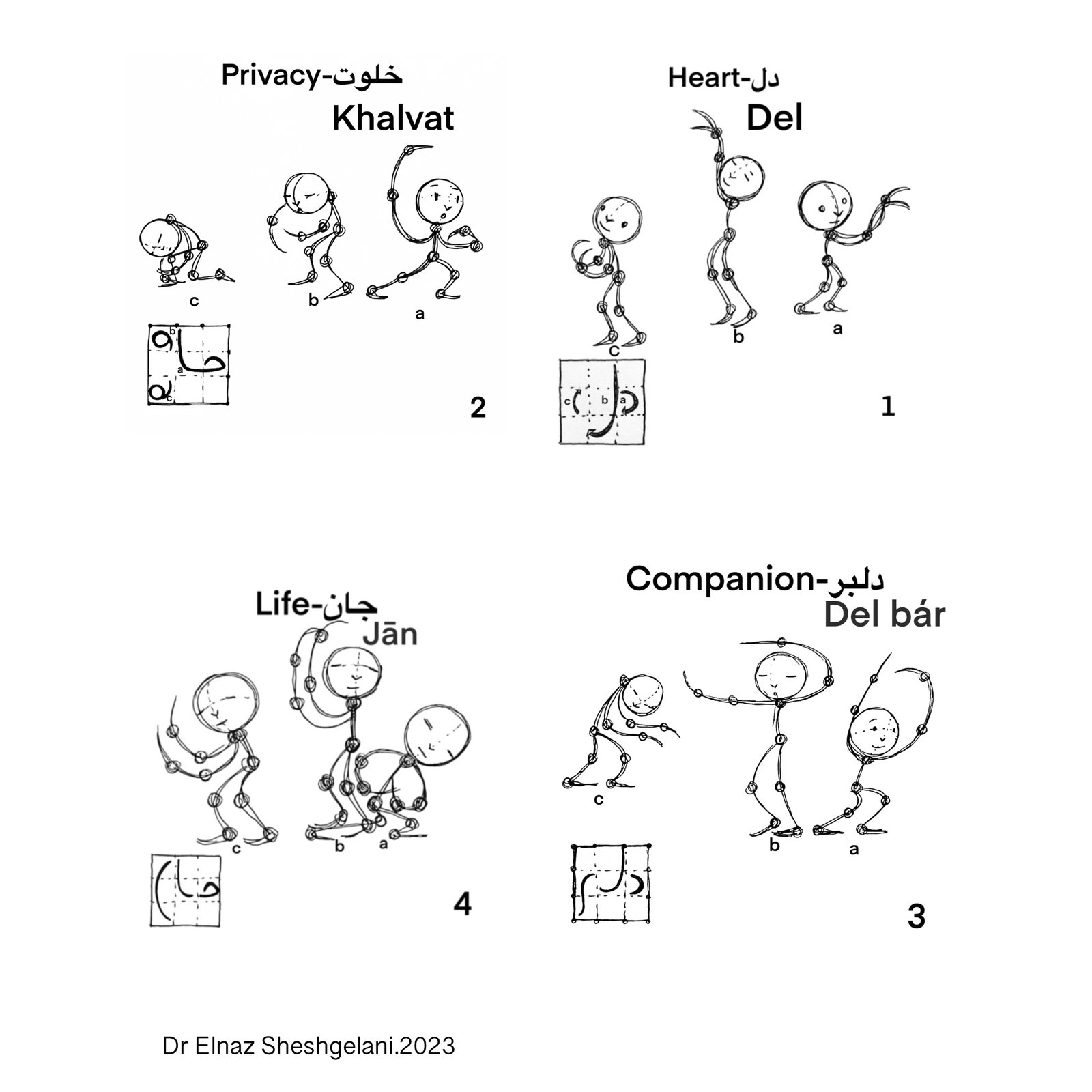
My central conviction is that PDS cannot survive through preservation alone. Naghali endured for millennia because it was intercultural by nature, absorbing what it encountered and returning something transformed. My method follows this logic, integrating PDS with the traditions of other cultures, including the Japanese concepts of Kata and Jo-Ha-Kyu, whose structural kinship with Adamaktion and Bāzi makes genuine intercultural dialogue possible; not to dilute the tradition but to keep it alive through encounter.
In workshops across Armenia, Germany, Indonesia, Malaysia, Greece,and Australia, Adamaktion has demonstrated one consistent capacity: it empowers people to tell their own stories. Where words fail across language barriers, the body finds a way through. In Armenia, participants carrying intergenerational grief from the Genocide found that embodied storytelling could release what verbal narrative could not reach. This is what PDS ultimately offers: not the spectacle of an ancient tradition, but the living experience of what that tradition always did - give people a language for the story they carry, and the courage to tell it.
© 2026 Elnaz Shsehgelani