Pedagogical Tools:
Adamaktion and calligraphic.motion
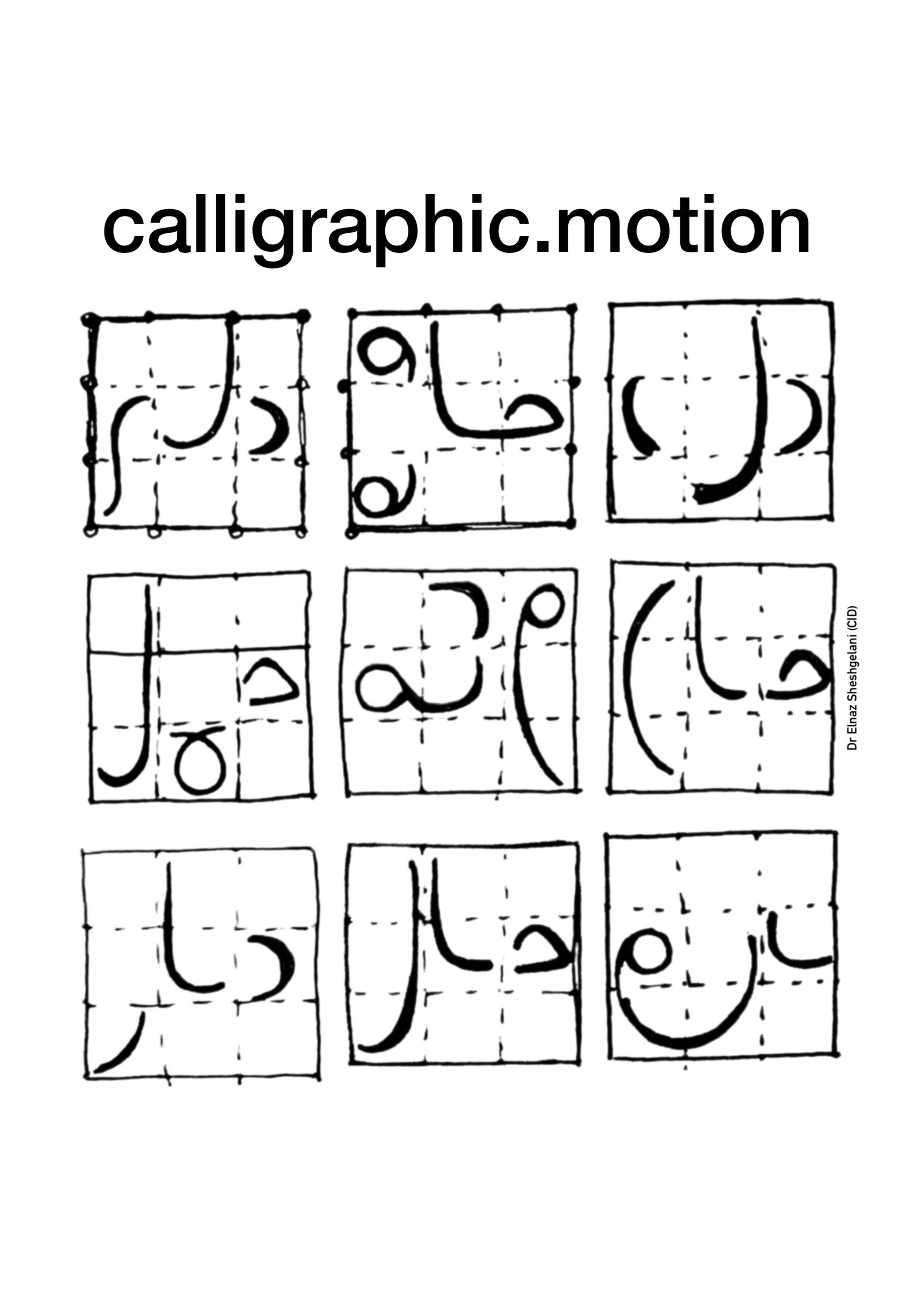
At the heart of Elnaz Sheshgelani's practice is a set of interconnected tools and concepts that together form the methodology of calligraphic.motion: Line/Body/Play. Each element has its own logic and history, but none operates independently - they are designed to work as a system, moving a participant from first encounter with an ancient form through to the spontaneous expression of their own story.
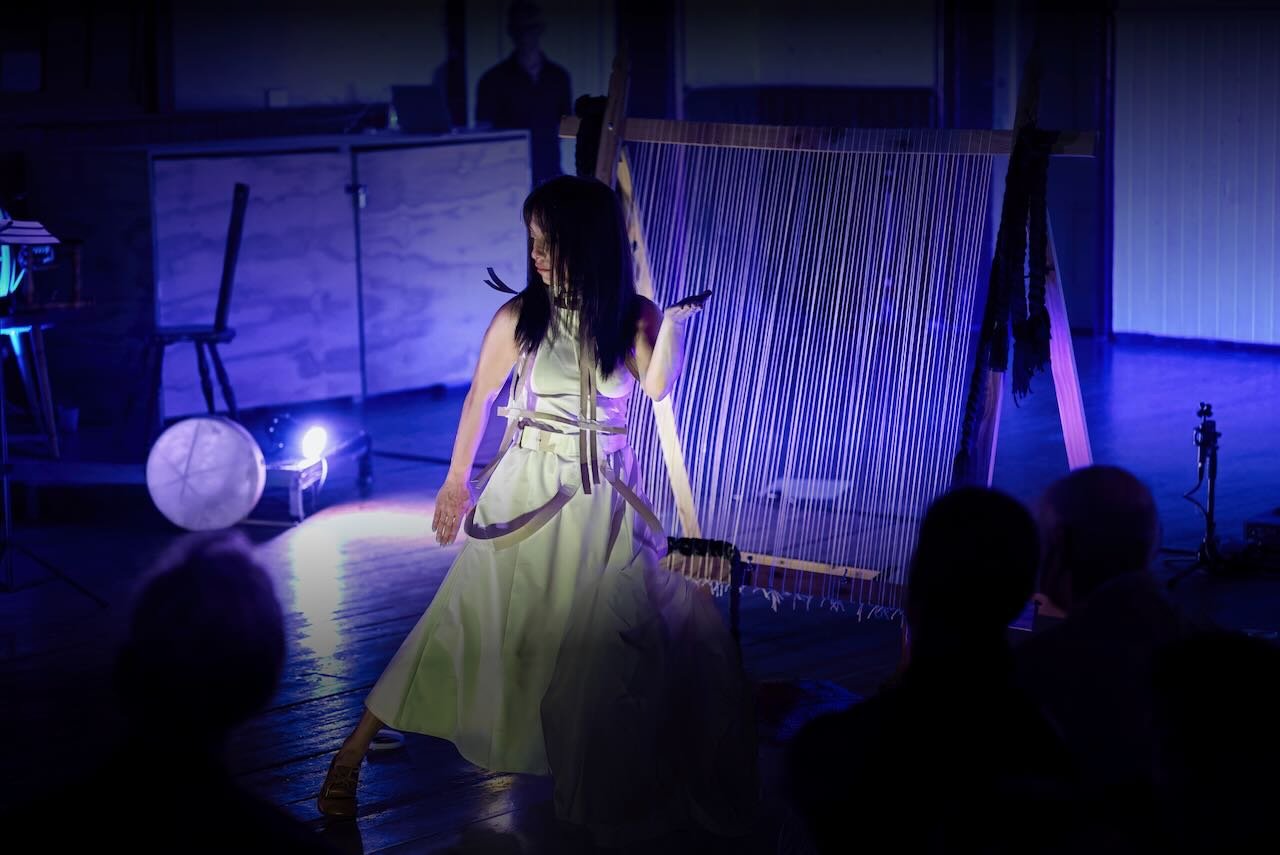
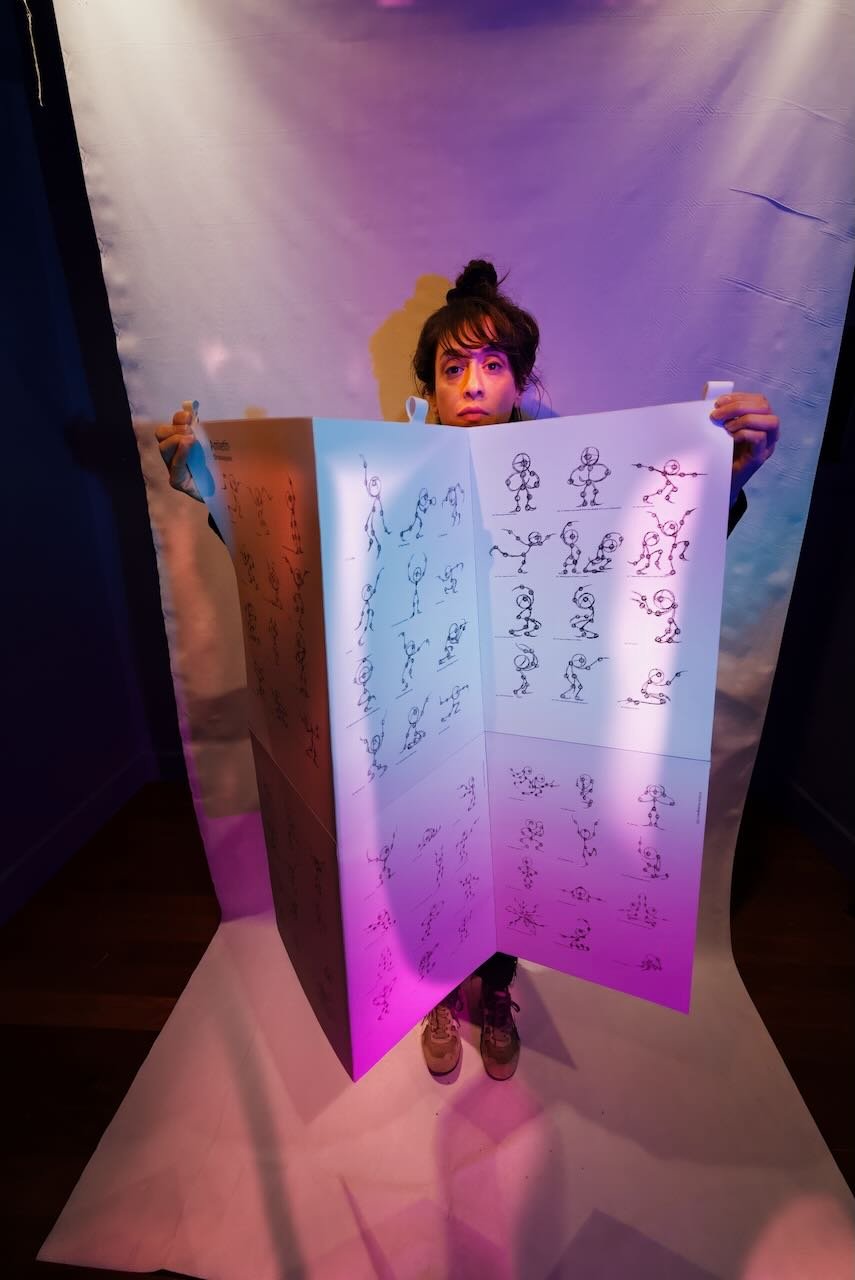
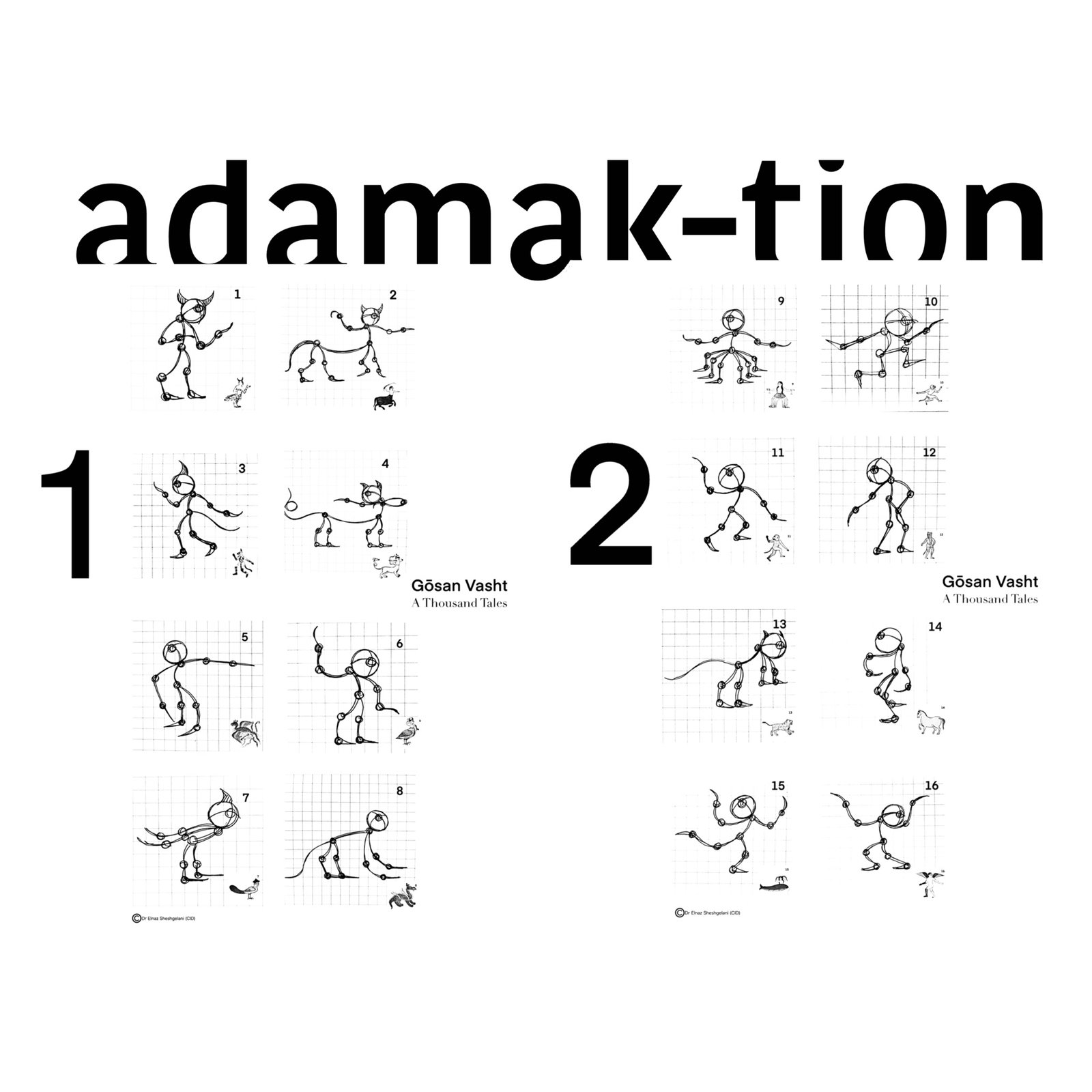
Adamak is the notation system. The word means 'human' in Persian, and the drawings it produces are human: figurative, gestural line figures derived from the illuminated manuscripts of the Shahnameh and other surviving Persian visual sources. Each Adamak drawing captures a body in a specific expressive state — a posture, a gesture, a moment of transition — rendered with enough precision to be teachable and enough openness to invite interpretation. Adamak makes the invisible visible: it translates the physical intelligence of Naghali into a form that can be read, copied, and carried. It is the written form of a tradition that has no other script.
Adamaktion is a gesture in use. Where Adamak is notation — the score — Adamaktion is performance: a specific body movement drawn from the Naghali gestural vocabulary and shaped for a particular storytelling moment. Sheshgelani describes Adamaktion as a boilerplate — a pre-built structure that a storyteller fills with their own content. It provides the architecture; the individual provides the meaning. Adamaktions are not fixed choreography but starting points: forms absorbed through repetition until the form disappears and only the impulse remains.
This is where the logic of Kata enters. In Japanese performance tradition, Kata refers to codified forms practiced with precision until they become instinct — the practitioner no longer thinks about the form but thinks through it. Adamaktion operates by exactly this principle. The gesture-forms of Naghali are learned not to be reproduced faithfully but to train the body in a stylistic intelligence that then becomes available for free use in storytelling.
Jo-Ha-Kyu gives this learning a temporal structure. Central to Japanese theatre and music, it describes three phases of energy: Jo, a slow and deliberate introduction; Ha, a breaking open into complexity; and Kyu, a rapid and decisive release. In Calligraphic Motion workshops, Jo-Ha-Kyu organises each session as an arc. Jo begins with Line — participants work with Avesta-inspired forms on paper and in the body, entering the practice through the geometry of ancient calligraphy. Ha moves into Adamaktion — gesture-forms are introduced, practiced, and begin to destabilise into personal expression. Kyu arrives as Bāzi.
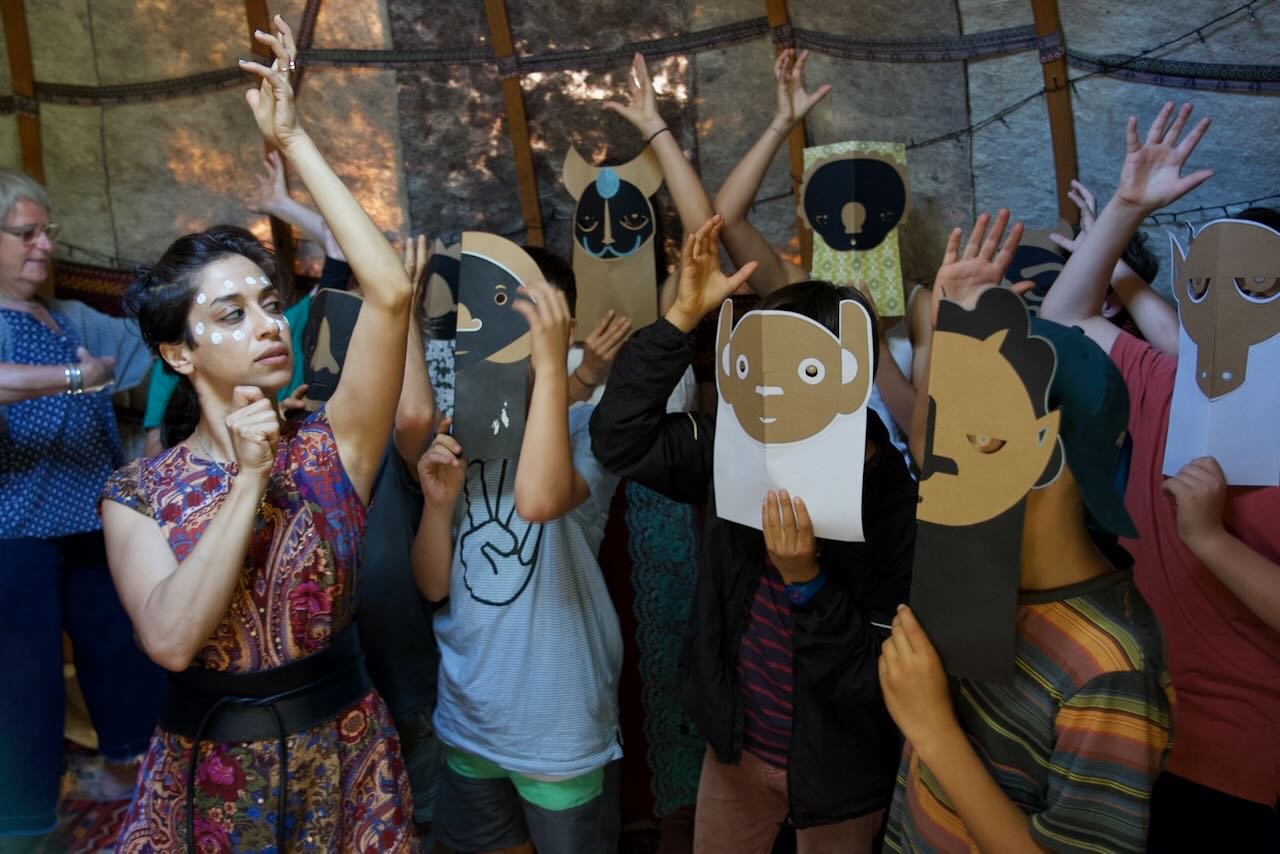
Bāzi is the Persian concept of creative play. It is not looseness or improvisation in the casual sense — it is the freedom available only after form has been fully inhabited. Bāzi is what happens when the body no longer needs to think about the Adamaktion: it plays with it, through it, past it, into the story it has been carrying all along. Its kinship with Kata is precise: both traditions understand disciplined form not as a constraint on expression but as its precondition.
calligraphic.motion: Line/Body/Play holds all of these elements together. Line is the beginning — the Avesta stroke, the spine, the first mark a body makes in space. Body is the middle — the encounter with Adamaktion, the Kata-structured absorption of ancient gesture-forms. Play is the arrival — Bāzi, the release into spontaneous storytelling, the moment when the participant is no longer learning a tradition but living inside one. Together they describe a journey from inscription to expression, from inherited form to personal voice — which is, finally, what Persian Dramatic Storytelling has always been about.
© 2026 Elnaz Shsehgelani